


| Home |
| About Us |
| Recent News |
| Photo Gallery |
| Alumni Chapter |
| Recruitment |
| LEAD |
| Brotherhood Roster |
| Contact Us |
|
|
|
|
History of Sigma Nu | |
|
|
|
|
|
|
|
|
|
|
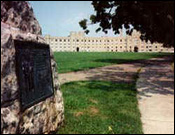
THE FOUNDERS The story of Sigma Nu began during the period following the Civil War, when a Confederate veteran from Arkansas enrolled at the Virginia Military Institute in Lexington Virginia. That cadet was James Frank Hopkins, and it is to him and two of his classmates that Sigma Nu owes its existence. When Hopkins enrolled at VMI, the south was in a state of turmoil and just beginning to recover from the devastating military defeat it had suffered. The Virginia Military Institute was highly recognized for its civil engineering program and the South badly needed to repair its bridges and railroads. At the Institute cadets suffered, not only of the ravages of war and a disrupted homelife, but because of the system of physical harassment imposed on lower classmen by their fellow students in the upper classes. Hopkins had experienced military subservience during the war, and was willing to tolerate a reasonable amount of constraint intended to induce discipline. However, Hopkins was unwilling to accept any amount of hazing then being allowed at VMI. Not one ounce of hazing was he willing to suffer and he was doggedly adamant about eliminating it. Hopkins soon was joined by two classmates and close friends who were also equally unhappy with the hazing situation. They were Greenfield Quarles, from Arkansas, a Kentuckian by birth, and James McIlvaine Riley from St. Louis, Missouri. These three men began a movement to completely abolish the hazing system at VMI. Their efforts climaxed on a moonlit October night in 1868, presumably following Bible study at the superintendent's home, when the three met at a limestone outcropping on the edge of the VMI parade ground. Hopkins, Quarles and Riley clasped hands on the Bible and gave their solemn pledge to form a brotherhood of a new society they called the Legion of Honor. The vows taken by these three Founders bound them together to oppose hazing at VMI and encouraged the application of the Principle of Honor in all their relationships. That the founders should adopt Honor as a guiding principle was a natural move since a rigid code of Honor was already an established tradition of the VMI Corps of Cadets. The Honor system at VMI required each cadet to conform to the duty imposed by his conscience that each act be governed by a high sense of Honor. SIGMA NU ANNOUNCED Although Sigma Nu Fraternity began in October 1868 as the Legion of Honor, its existence was kept secret until the founders publicly announced their new society on the first day of January 1869, the accepted birthdate of Sigma Nu. What a New Year's celebration it must have been for cadets who could not go home for the holidays! In those days the Institute did not close for "breaks" as we know them. It suspended classes only for the day on such occasions as Christmas and New Year's. The Fraternity's spiritual birth, however, actually occurred in 1866, the year the Founders entered VMI, when Frank Hopkins first rebelled against hazing at the Institute. Still, the Founders did not create Sigma Nu with any feeling of animosity toward others; rather they were prompted by the impulses of sympathy and affection for all people which underlie abiding peace and contentment. They had experienced enough hate and destruction all during and after the War. They wanted to end all abuses, and they knew it would not come easily. It was never an issue of who won or lost the War. It was only an issue of winning the peace. The Legion of Honor society in its first year assumed the outward aspects of a college Greek-letter organization. The organization kept its original name secret but was recognized publicly as Sigma Nu Fraternity. It was soon to win the respect of all. The new Fraternity needed an identifying symbol, and Founder Hopkins designed a Badge for the members to wear on their uniforms. That Badge was patterned after the White Cross of the French Legion of Honor, which was worn on the uniform of a favorite professor of Hopkins. The Badge was first introduced in the spring of 1869. Keeping with the Founders' decree, the Badge has remained unchanged ever since, except in size and the raised center. Even today, the collegiate Commander's Badge, and the Badge of the Grand Officers remain identical to Hopkins' original Badge. When the first slate of Officers was chosen, Riley, the most popular, was elected Commander and Hopkins the Lieutenant Commander. Typically, Hopkins, the epitome of humbleness, was delighted that "Mac" Riley was chosen leader. It gave Hopkins "the doer," thinker, planner, along with Quarles who had similar talent, more of an opportunity to concentrate on solidifying ol' Alpha before he graduated in 1870. By the 1869 commencement, the group had grown to fifty-one members. SIGMA NU EXPANDS Expansion began for Sigma Nu in 1870 after the graduation of the Founders, when the mother chapter at VMI, then known as Chapter I, approved the establishment of a chapter at the University of Virginia. Later, a permanent numbering system established a Greek-letter designation for chapters. Thus, Chapter I became Alpha and the University of Virginia chapter became Beta. Sigma Nu established a chapter at North Georgia Agricultural College in 1881. One of the men instrumental in the chartering of the North Georgia chapter was John Alexander Howard. He was blessed with rare intellect and considerable talent for writing. That talent led him naturally to newspaper work. Howard read widely and in his reading discovered Baird's Manual of American College Fraternities. He read that book until he was familiar with all national fraternities. His study of other fraternities prompted him to examine shortcomings of his own fledgling Fraternity. At this time Sigma Nu was still using the Roman numeral designation for chapters. Howard felt that the Fraternity should adopt a Greek-letter designation according to the founding date of the chapter. Thus, his own chapter at North Georgia became Kappa. Howard's main contribution was the founding of The Delta, the Fraternity's renowned magazine. He selected The Delta for the magazine's title to symbolize the geographic relationship of the three existing chapters of the Fraternity at that time, Alpha, Lambda and Kappa. The first edition of The Delta was published in April 1883 and contained sixteen pages. FIRST NATIONAL CONVENTION The year following the publication of The Delta witnessed another important milestone for Sigma Nu. That event was the First National Convention, which met at the Maxwell House Hotel in Nashville, Tennessee, July 9-10, 1884. The person responsible for the First National Convention was Isaac P. Robinson (Lambda, Washington and Lee). Robinson felt that a meeting of alumni and collegiate representatives was imperative because of a need to update the constitution, revise procedures and coordinate efforts. The Sigma Nu convention later became known as Grand Chapter. It is held every two years and serves as the legislative body of the General Fraternity. Another event in 1884 which had a major impact upon the Fraternity was the establishment of Nu Chapter at the University of Kansas. During the first fifteen years of its existence, Sigma Nu was primarily a southern fraternity, and the decision to establish Nu Chapter was to be the first step in a radical expansion program. Nu chapter was to open the West and North for Sigma Nu. Eugene L. Alford of Lambda was instrumental in the founding of Nu Chapter. Two charter initiates of Nu who became very influential in Sigma Nu in later years were Perlee Rawson Bennett and Grant Woodbury Harrington. Bennett served the Fraternity as Grand Recorder for many years and in 1890 was elected Regent. He presided over the Sixth, Seventh, Eighth, and Tenth Grand Chapters. Harrington became editor of The Delta and Grand Recorder. For eight years (1886-1894) he had almost total responsibility for the administration of the Fraternity. Other early members of Nu Chapter were the Sears brothers, William H. Sears, Clarence H. Sears and Walter James Sears, who also became influential in Sigma Nu affairs. Their brother, Lorin Beecher Sears, attended Ohio State University where no chapter of Sigma Nu existed at the time. Walter was so interested in having Lorin initiated into the Fraternity that he entered Ohio State University, founded Beta Nu and became its first initiate; Lorin became its second. Walter Sears devoted much of his lifetime to Sigma Nu, but his name will be remembered best for his beautiful prose work, "The Creed of Sigma Nu." THE MOVE WEST Leland Stanford University opened in 1891. Among its first students was Carl Lane Clemans, who had founded Chi Chapter at Cornell College in Iowa. Clemans was determined to open a chapter on the West Coast, and he recruited enough men to charter Beta Chi Chapter at Stanford in November 1891. Beta Chi's fame soon spread to Berkeley, and Clemans went there to help organize Beta Psi in February 1892. Sigma Nu opened the Northwest to Greek letter organizations when Gamma Chi was chartered at the University of Washington in 1895, earning the Fraternity kudos throughout the Greek community for its "Northwest conquest." For almost four years Sigma Nu was the only college fraternity in the Northwest, having been the first to establish a chapter not only in the State of Washington, but also Montana and Oregon. Beta Iota at Mount Union was chartered by Walter James Sears in 1892. Three years later Beta Iota initiated Albert Hughes Wilson, to whom Sigma Nu owes a great debt. "Bert" Wilson served as Regent, but his most noteworthy achievement was in expansion. Wilson established more chapters than any other member of the Fraternity, thirty-two in all, and he is generally credited with helping develop Sigma Nu into a geographically representative organization. Brother Wilson was the exemplar of interfraternity spirit as well, being chiefly responsible for the founding of Alpha Sigma Phi men's fraternity. As an aside, it should be noted that Brother Wilson C. Morris (Beta Iota, Mt. Union) is given credit by Sigma Tau Gamma men's fraternity as being the driving force behind its founding while the collegiate Brothers of Delta Theta Chapter, Lombard (Knox) College assisted greatly with the founding of Alpha Xi Delta women's fraternity. HEADQUARTERS ESTABLISHED Having active chapters in each section of the country, Sigma Nu was now in every sense a national fraternity. Expansion proceeded at an orderly rate, and by 1915 there was a need for centrally located administrative offices with full-time officers. Heretofore, the various Sigma Nu officers maintained their files and records at their own homes or places of business. Fire had once destroyed many of the Fraternity's records, and there was a lack of coordination in general. Following the Denver Grand Chapter in 1915, the High Council approved the establishment of the central administrative system first proposed by Regent Francis V. Keesling (Beta Chi, Stanford). The plan, adapted by Walter J. Sears, converted the High Council into a board of directors elected by the Grand Chapter; all executive and administrative duties previously exercised by members of the High Council and committees were lodged in a single official - the General Secretary (now Executive Director) - appointed by the High Council and subordinate to its direction. Indianapolis was selected as the location of the Fraternity's headquarters, and on November 1, 1915 the General Offices were opened there temporarily in the Lemcke Annex before moving into the main building. Bixby Willis (Lambda, Washington and Lee), a past Grand Treasurer of Sigma Nu, was employed as the first General Secretary. In 1926 the central office was moved to the Illinois Building in Indianapolis. Indianapolis served as the Fraternity's headquarters for forty-two years, during which time fifty-five new chapters were added to the roster of the Legion of Honor. FOUNDERS JOIN CHAPTER ETERNAL Founder James Riley, who had served ten years (1869-79) as the Fraternity's first Regent, entered the Chapter Eternal on May 6, 1911, in St. Louis, Missouri. Members of the Fraternity carried his remains to a burial plot purchased in Bellefontaine Cemetery by the St. Louis Alumni Chapter in fraternal affection for the Founder. The life of James Frank Hopkins ended on December 15, 1913, and he was laid to rest in the village cemetery at Mablevale, Arkansas, beside his sweetheart from cadet days and devoted wife, a native Lexingtonian, Jennie Barclay Hopkins. In 1920 an impressive memorial was dedicated at the gravesite. Greenfield Quarles, the only Founder still living, offered a tribute to Alpha 1: The love of our Brother for his fellow man was only excelled by his love of God. His example has instilled into the hearts of us all the principles which guide us now, and these principles will go down in future generations for all time. His life has been an inspiration to all youth. All that was mortal of Brother Hopkins lies buried here; but his immortal spirit will live forever. Six months later, the last of the three Founders was taken from living contact with the Fraternity. Judge Greenfield Quarles entered the Chapter Eternal at his home in Helena, Arkansas, January 14, 1921. He had lived a life of noble service. EDUCATIONAL FOUNDATION In 1945, Brother William P. Yates (Beta Rho, Pennsylvania), inspired the formation of the "Sigma Nu Inc., Educational Foundation" with a handsome bequest. Its name was changed in recent times to the "Sigma Nu Educational Foundation, Inc." The foundation has been instrumental in assisting collegiate members with financial aid supplements, and the General Fraternity in the development of the LEAD Program, (LEAD is an acronym for leadership, ethics, achievement, development). The Foundation continues to support the exclusively educational programs of the Fraternity. RETURN TO LEXINGTON Even before Sigma Nu's first central office was organized in Indianapolis, some dreamed of the day when the Fraternity would have an appropriate shrine at Sigma Nu's birthplace, but it took nearly four decades before the first step was taken. That step was the appointment of a Headquarters Committee in 1954. It compared rent with ownership and ultimately recommended the latter in a college town where a Sigma Nu chapter thrived. Inevitably Sigma Nu history and tradition pointed to Lexington. Regant James W. Bradley (Epsilon Epsilon, Oklahoma State) and his High Council took the historic step in 1957, purchasing without mortgage or lien a singularly appropriate property, a large, a large home ideally suited for conversion and development. The land, conveniently located on the highest hill in the corporate limits of Lexington, Virginia, and on a seven-and-one-half-acre tract overlooking VMI and Washington and Lee University, enjoys the Blue Ridge Mountains as a backdrop to the east and the Allegheny Mountains to the west. The land was originally owned by the son of General Frances H. Smith, the first superintendent of VMI, who inspired Hopkins in the founding of Sigma Nu; the house, built by the grandson of Superintendent Smith, came to Sigma Nu directly from the Smith family. Milton L. Grigg, a renowned Virginia architect and participant in the famous Williamsburg Restoration, was contracted to restore the building. The Headquarters Facility was occupied in 1958 and officially dedicated June 9, 1960. SIGMA NU CENTENNIAL On January 1, 1969, Sigma Nu reached its one-hundred-year milestone. In the year that followed, it marked that event with a series of Centennial dinners at 36 locations throughout the country and with pilgrimages to the gravesites of the three Founders and the first editor of The Delta. Then on Sunday, June 15, a Centennial Convocation was held in Lexington. Two beautiful new wings of the Headquarters building were dedicated, one housing the Sigma Nu Museum and the other the Fraternity's Honor Library, later to be dedicated in tribute to former Executive Secretary Richard R. "Dick" Fletcher, who had long since earned the moniker "Mr. Sigma Nu." Sigma Nu in its 100th year had come a long way from its founding. At the century mark it had issued 164 charters of which 143 chapters were alive and flourishing. Of the nine other truly national fraternities older than Sigma Nu, only three had more initiates. Sigma Nu owned 110 chapter houses providing living accommodations for more than 3,500 students. All this had been accomplished solely through the appeal of its principles - without false claims or specious promises, without merger, without honorary members. Every chapter had earned its own way by applying integrity in both purpose and method. SIGMA NU CELEBRATES ITS 125TH YEAR Well into the Fraternity's second century, Sigma Nu continued its dramatic growth. Today, the number of initiates is nearly 200,000; the number of chapters approaching 250. Many of the Fraternity's chapters have initiated more than a 1,000 members, with a large number topping 1,500 and several exceeding 2,000. Among the many significant achievements during the past decade has been the addition of adjacent properties in Lexington, Virginia, known as the Ethical Leadership Center, owned by the Sigma Nu Educational Foundation, Inc. Particularly noteworthy is Sigma Nu's interfraternity leadership in risk reduction and risk management matters followed by the introduction of its unique LEAD Program, one of the most meaningful educational initiatives ever undertaken by a college fraternity. In addiction, the transfer of ownership of the Fraternity's Headquarters property, known as the Sigma Nu Headquarters Shrine, to the Sigma Nu Educational Foundation, Inc. has enabled alumni gifts to assist in its restoration and preservation, so as to relieve the burden of upkeep on future generations of collegians. Finally, in celebration of the Fraternity's 125th anniversary, the Foundation undertook construction of a third wing to the Headquarters Shrine as well as a Pathway of Honor of engraved bricks, which provides an opportunity to celebrate the life of each Sigma Nu. The Pathway of Honor will meander throughout the Lexington properties. A special "Pilgrimage to the Rock" was one of the memorable highlights of the 56th Grand Chapter held in Washington, DC, in August 1994. For a century and a quarter Sigma Nu chapters have
shaped the man of integrity. Their challenge for the future is to
focus efforts and energies anew to the fuller realization of the
great mission set by our Founders - to build Men of Honor, ethical
leaders for society based upon the concept of the Brotherhood of
Man under the Fatherhood of God. Indeed, Sigma Nu may be on the
threshold of the era of its greatest achievement as it enters the
21st Century.  Discover Sigma Nu in the present day ... Next >> |
|
|
|
|
 Sigma
Nu's past is a proud and colorful one. Founded by three cadets at
the
Sigma
Nu's past is a proud and colorful one. Founded by three cadets at
the |
|
|
||
|
|
|
||
|
|
|






|
The Epsilon Sigma Chapter Website is
a college fraternity resource for fraternity
recruitment, fraternity parties, and Greek Life. |